
How to Organize a Closet So It Stays Organized
A closet stays organized when it holds only what you wear and every item has a set place. Start by editing: sort everything into keep, donate, sell and discard. Then set up the space by how often you reach for things, with everyday items between knee and shoulder height. In Scottsdale, keep stored clothing inside the cooled house and out of direct sun.
TLDR:
- Edit before you organize. Containers cannot fix a closet that holds too much.
- Set up by reach zone: everyday items in easy reach, seasonal items up high, heavy items low.
- Walk-in and reach-in closets need different layouts, but the same rules apply.
- Sunlight and heat weaken fabric. Keep stored clothes indoors, not in the garage or attic.
- Clean clothes before storing them, and skip dry-cleaner plastic bags.
- Cedar alone will not keep moths away. A tight seal matters more.
Most closets do not fail because of the wrong hangers. They fail because they hold years of clothes nobody is wearing, pushed together until nothing is easy to find or put back.
Scottsdale adds its own challenges. Bright sun through a closet window fades fabric, and a garage or attic that feels fine in March is no place for clothes in July. This guide covers how to edit, lay out and protect a closet so the system actually lasts.
Want help with a closet you have been avoiding? Our team works beside you to sort, decide and set up a system that fits how you live. Nothing leaves your home unless you agree to it.
Start With an Edit, Not a Container
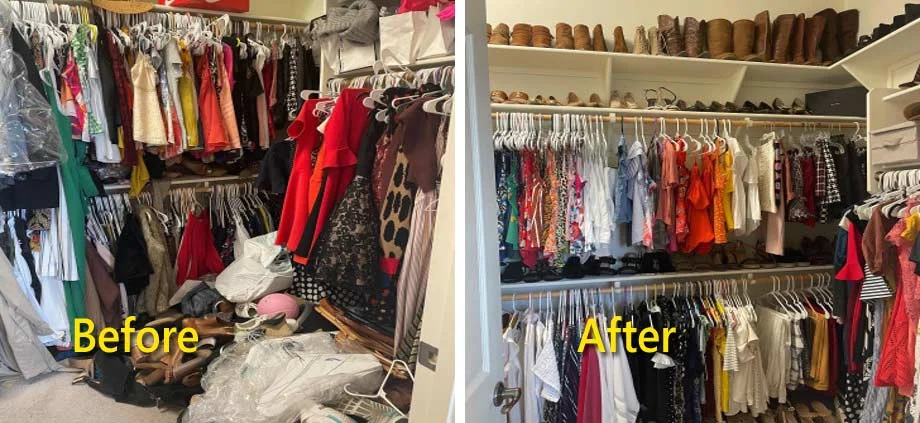
The biggest closet upgrade is usually removing things, not adding them. Take everything out, or work one section at a time, and sort into four groups: keep, donate, sell and discard.
Where those clothes go matters. The EPA estimated that Americans generated 17 million tons of textiles in 2018, with discarded clothing the main source. Landfills received 11.3 million tons, and the recycling rate for all textiles was 14.7%.
Donating keeps good clothing in use. If you plan to deduct it, the IRS says you can’t deduct clothing “unless the clothing or household items are in good used condition or better,” and that the value of used clothing “is usually far less than the price you paid for them.” For a larger household, an estate sale may make more sense than donating piece by piece.
Set Up Every Closet by Reach Zone
Once the closet holds only what you use, set it up by how often you reach for each item. The goal is that daily items take no effort to grab and put back.
A useful benchmark comes from the federal 2010 ADA Standards for Accessible Design, which set a forward reach range of 15 to 48 inches above the floor and name closets, shelves, clothes rods, hooks and drawers as storage types. Those rules do not apply to private homes, but the range is a good guide for anyone, and especially for older adults.
Walk-in closets
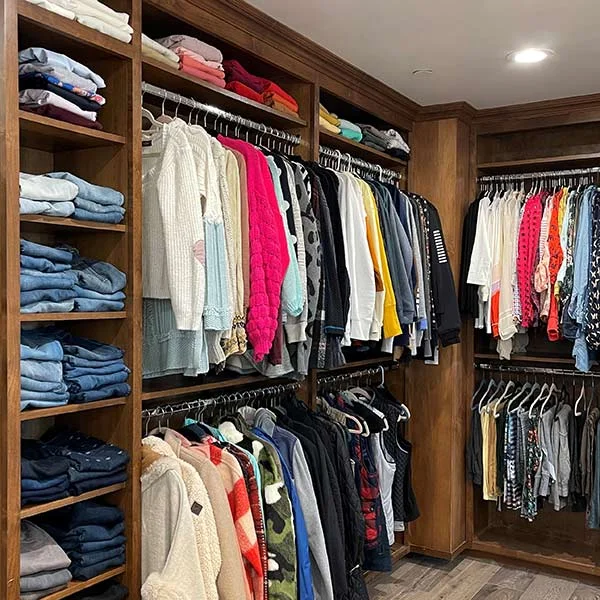
A walk-in gives you room to separate categories. Hang clothing by type, then by color, so you can see everything at once. Put folded items like jeans and sweaters on open shelves at eye level, and keep shoes low where they are easy to see.
Reach-in closets
A reach-in closet works best with a clear front zone. Keep the rod for what you wear most, add a second rod below it for shirts and folded pants if the height allows, and use the shelf above for labeled bins of seasonal items. The back corners are the hardest to reach, so save them for things you rarely need.
Ready for a closet you can actually use? We will help you edit, design a layout around how you get dressed, and set up a system that is easy to keep. Free consultation, clear estimate, no surprises.
Protecting Clothes From Arizona Heat and Sun
Scottsdale’s sun and heat are hard on fabric, even indoors. Where you store clothes matters as much as how.
University of Kentucky extension guidance on caring for textiles explains that “the ultraviolet rays in all types of light cause textile fibers to weaken and dyes to fade,” from both sunlight and indoor lighting. It adds that “high temperatures cause brittleness of fibers,” and puts the ideal storage conditions at 65 to 70°F and 40 to 50% humidity.
The University of Nebraska advises: “Avoid storing textiles in attics, basements, kitchens and unheated areas.” In a Scottsdale home, that usually means keeping seasonal clothing inside the cooled house, not in the garage. If a closet has a window, a shade or film helps protect what hangs nearest to it.
Storing Seasonal Clothes: Plastic, Cedar and What Works
Storing winter clothes for the long Arizona summer is where most damage happens. A few habits prevent most of it.
Clean first. The University of California’s pest management program says “insects are less likely to feed on clean fabrics than on heavily soiled ones,” and to store susceptible items clean and “in an airtight container.”
Choose containers carefully. Sealed bins protect woolens from moths, but plastic has limits. University of Kentucky guidance says to “avoid wrapping textiles in plastic bags” because moisture can condense and bags can release acidic fumes. Nebraska’s extension notes that “moisture trapped inside tightly sealed plastic bags can result in mildew.” Clean, dry clothes in a sealed bin are one thing. Dry-cleaner bags are another.
Don’t count on cedar. University of Kentucky’s clothes moth guide says “cedar closets or chests are seldom effective in deterring clothes moths” because the seal is not tight enough. The University of Florida adds that cedar “only provide[s] protection when stored materials are free from infestation.”
Dressers and Tip-Over Safety
Many walk-in closets include a dresser or a freestanding storage unit. If children are ever in the house, anchoring it is part of organizing.
The Consumer Product Safety Commission reports 234 deaths from clothing storage unit tip-overs from January 2000 through April 2022, including 199 children. Dressers made after September 1, 2023 must meet a federal stability standard. For older furniture, the CPSC advises: “Anchor TVs and furniture, such as bookcases and dressers, securely to the wall,” and to store heavier items on lower shelves.
Keeping It Organized
A system only works if it is easy to keep. A few habits help.
- One in, one out: when something new comes in, something old goes to the donate bin.
- Keep a donate bin in the closet, so edits happen as you notice them.
- Swap seasons twice a year, and edit again each time.
- Put things back by zone, not wherever there is space.
Our guide to what a professional home organizer does explains what working with an organizer looks like, if you would rather not do it alone.
Common Questions About Closet Organization in Scottsdale
These are the questions Scottsdale homeowners ask most when they start on a closet. Each answer ties back to the guidance above.
How do I start organizing a closet?
Start with an edit, not new containers. Take everything out, or work one section at a time, and sort into keep, donate, sell and discard. Once the closet holds only what you wear, set it up by reach zone, with everyday items between knee and shoulder height and seasonal items higher up.
What is the best way to organize a walk-in closet?
Hang clothing by type, then by color, so everything is visible at once. Put folded items like jeans and sweaters on open shelves at eye level, keep shoes low, and use high shelves for labeled seasonal bins. Keeping the everyday zone within easy reach is what makes the system last.
Where should I store clothes in an Arizona home?
Keep stored clothing inside the cooled part of the house. Extension guidance says high temperatures make fibers brittle and advises against storing textiles in attics and unheated areas. Light also fades and weakens fabric, so keep clothes out of direct sun, including near closet windows.
Do cedar closets keep moths away?
Not reliably. University of Kentucky extension guidance says cedar closets or chests are seldom effective against clothes moths because the seal is insufficient, and the University of Florida says cedar only protects clothes that are already free of pests. Cleaning items and storing them in tightly sealed containers matters more.
Is it okay to store clothes in plastic bags?
Avoid dry-cleaner bags and loosely sealed plastic. Extension guidance warns that plastic bags can trap moisture and cause mildew, and that some release fumes over time. For woolens, clean and fully dry items stored in a sealed bin protect against moths, as long as they go in clean and dry.
Can I deduct clothing I donate?
Only if it is in good used condition or better, according to IRS Publication 526, and you generally need to itemize deductions. The deductible value is what similar used clothing sells for in thrift or consignment shops, which is usually far less than what you paid. Keep a receipt from the charity for your records.
Learn more about our closet organization in Scottsdale and our closet organization services across the Phoenix area.
Ready for a closet that stays organized? Start with a free consultation.
Tell us about your closet. We will walk through it with you, build a plan around how you live, and give you a clear estimate before any work begins, so there are no surprises.