
What Does a Professional Home Organizer Do for Your Home?
A professional home organizer works beside you to sort what you own, help you decide what stays, and set up simple systems that fit how your household actually lives. They do not throw things away without your say-so, and they do not judge what they find. For most Phoenix and Scottsdale homes, the work starts with a walkthrough and a plan.
TLDR:
- An organizer helps you sort, decide, and build systems you can keep up on your own.
- Nothing leaves your home unless you agree to it. That is the most important rule.
- The first session is part planning, part doing, and it moves at your pace.
- Most organizers bill by the hour with a minimum session, and a good one explains the estimate up front.
- If it is one closet and you have a free weekend, you may not need help at all.
- Organizing for a move and organizing to stay are two different jobs.
- Comfort matters more than the rate. You will make hundreds of small decisions with this person.
The call to an organizer rarely comes out of nowhere. Around Phoenix and Scottsdale it tends to arrive alongside something bigger: a move across town or across the country, a winter home to set up, a parent ready to downsize, or a house that quietly filled up during a hard year.
If you are reading this because picking up the phone feels like admitting you failed at something, it is not that. Organizing is a skill, like doing your own taxes or fixing a sprinkler line. Plenty of capable people hand it off, and this guide explains what that actually looks like.
Not sure where to start? Start with a conversation.
Busy Bees offers a free consultation to talk through your space and your goals, then build a plan around them. No pressure and no judgment, just a clear next step.
The Work Itself: Sorting, Deciding, and Building Systems
Most people picture an organizer arranging a pantry into matching jars. That is the visible last step. The real work happens before it, and most of it is about decisions rather than containers.
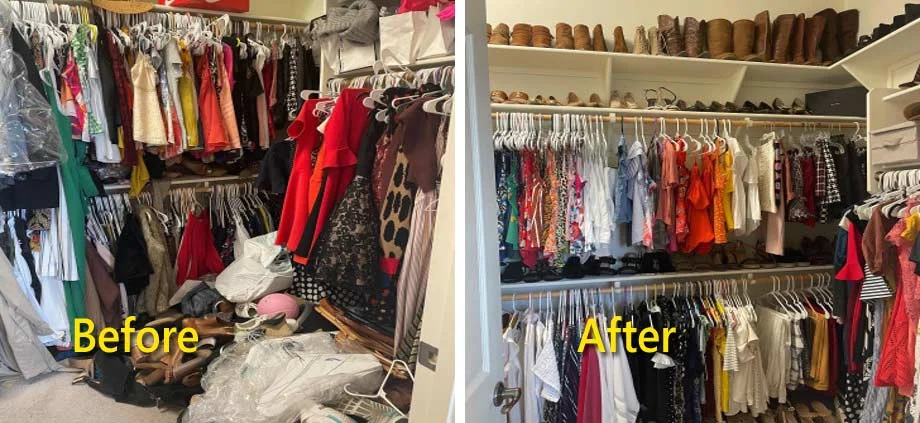
A typical engagement covers five kinds of work:
- Sorting. Pulling everything in a space into categories so you can see what you actually have, often for the first time in years.
- Decision support. Helping you decide what to keep, donate, sell, give to family, or let go. The organizer asks questions. You make the calls.
- Space planning. Working out where things should live based on how frequently you use them and who in the house uses them.
- Systems. Setting up simple routines and zones that are easy to keep up, so the space still works a month later.
- Follow-through. Getting donations out of the house, labeling what needs labels, and leaving the space ready to use.
It helps to know what organizing is not. It is not house cleaning, although a sorted room is far easier to clean. It is not moving, although organizers frequently help before and after one. And it is not an estate sale, which is a separate service for selling the contents of a home.
Every home is different, which is why Busy Bees builds personalized home organization plans around how your household actually uses its space rather than a template.
What an Organizer Will Never Do
This is the section most people want to read first, even if they would not say so. Letting someone into your home, and into the corners you usually close the door on, takes trust. Clear boundaries earn it.
A good professional organizer will never:
- Throw away your things without your say-so. At Busy Bees, nothing gets discarded without your input. You decide, every time.
- Make you feel judged. How the space got this way does not matter. What you want it to become does.
- Rush sentimental decisions. Photos, letters, a parent’s belongings. Those get set aside and handled when you are ready, never sorted for you.
- Pretend to be something they are not. An organizer is not an appraiser, an electrician, or a contractor. Busy Bees does not handle installations, and we coordinate with the right professionals when a project needs them.
- Share what they see in your home. The NAPO Code of Ethics, as published in 2026, commits members to keeping all client information confidential, both business and personal.
That same code asks members to recommend other qualified professionals when a request falls outside their skills. It is a useful standard to hold any organizer to, member or not.
Once the boundaries are clear, the next question is usually what the first day will actually be like.
What Actually Happens in Your First Session
The first session feels less dramatic than people expect. Nobody empties your house onto the lawn. It is closer to a guided conversation that turns into steady, practical work.
It usually unfolds in this order:
- The walkthrough. At Busy Bees this begins with a free consultation, where we listen to your goals and walk through the space with you.
- The plan. Together you pick a starting point. It is typically one area that bothers you daily, not the hardest room in the house.
- Starting small. Sorting begins in that one area. Progress shows up early, which matters more than people realize.
- Pacing decisions. Your organizer keeps the questions simple and moves at your speed.
- What leaves that day. Donations and trash you have approved go out the door, so the change is visible before the session ends.
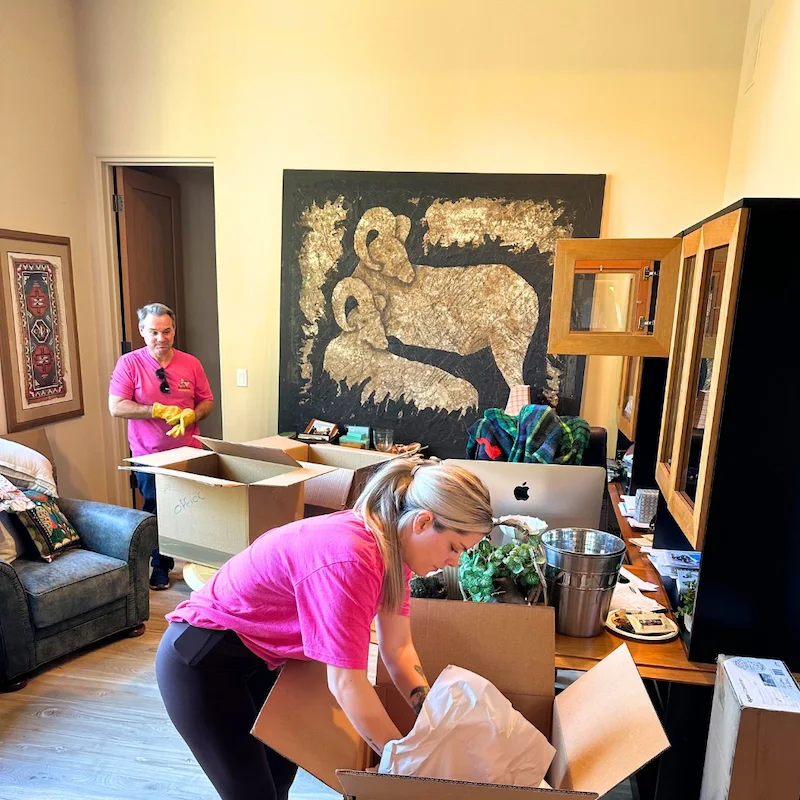
We encourage clients to be present during sessions. Your preferences drive every decision, and working side by side is how an organizer learns the way your household actually runs.
The part nobody warns you about
Decision fatigue is real. Every item is a small choice, and after a few hours of them, even simple calls start to feel heavy.
A good organizer watches for it. They slow down, switch to easier categories, or stop for the day. Stopping is not a failure. Pushing past it is how people end up regretting what they let go.
How Organizers Charge Around Phoenix and Scottsdale
Billing is usually simpler than people fear, and asking about it is not rude. A good organizer expects the question and answers it plainly.
Most organizers bill in one of three ways:
- By the hour, with a minimum session. This is the most common structure. Busy Bees charges hourly, typically with a minimum session, so short visits still make sense for both sides.
- By the team hour. When more than one organizer works at once, the hours generally count per person. A team can often finish in fewer visits, which some households prefer.
- By the project. For larger jobs, some organizers estimate the whole project after seeing the space.
What moves the total is mostly volume and decisions: how much is in the space, how many rooms are involved, and how quickly you are comfortable deciding. Ask up front if containers and shelving are included or billed separately.
The NAPO Code of Ethics asks members to communicate their fees and expenses in advance. At Busy Bees, that estimate comes out of the free consultation, so the number is based on your actual home rather than a guess.
Do You Actually Need One?
Here is an honest answer that might save you money: not always.
You may not need an organizer if the job is one closet or one cabinet, you have a free weekend, and you find it easy to let things go. A focused afternoon and a trip to a donation center can do a lot.
Help tends to pay for itself in harder situations:
- Mobility or health limits make bending, lifting, or climbing risky.
- Grief is in the room, and every drawer brings up something.
- A deadline is coming, like a closing date or a move-in day.
- Years of accumulation have built up past what a weekend can touch.
- It is a parent’s home, and family dynamics make every decision harder.
If you recognize yourself in that second list, that is not a character flaw. It just means the job is bigger than one person should carry alone.
If the job feels bigger than a weekend, let us help you size it up.
A free consultation gives you a clear picture of the work and a plan before you commit to anything.
Organizing for a Move vs. Organizing to Stay
These two jobs share a skill set, but the goals point in different directions, and mixing them up wastes time.
Organizing for a move is about reduction and sequence. The question is what makes the trip, and every item you decide on now is one you do not pack, carry, and unpack later. Our packing and unpacking services pick up where that sorting leaves off.
Organizing to stay is about daily use. The question is where things should live so that the house works on a busy Tuesday morning. Systems, zones, and habits matter more here than volume.
If a move is coming, sort first and organize at the new place. Building beautiful systems in a house you are about to leave is effort you will not get back.
Downsizing, Seniors, and Family Dynamics
Some of the most meaningful organizing work happens when a parent or grandparent is moving to a smaller home. These projects carry more emotional weight than any pantry.
A lifetime of belongings rarely fits into the next space, so the job is partly practical and partly about honoring what those things mean. Adult children often feel caught between respecting a parent’s wishes and meeting a real deadline.
An organizer can take some of the heat out of those moments. A neutral person asking “Where will this go in the new place?” lands differently than a son or daughter asking the same thing.
If the conversation itself has not happened yet, start there. Our guide to talking to a parent about downsizing covers how to open it with care.
How to Choose an Organizer You Will Be Comfortable With
You will spend hours with this person in your most private spaces, so fit matters more than a small difference in rate. A short phone call tells you a lot.
Questions worth asking before you book:
- How do you handle items I am unsure about? Listen for patience rather than pressure.
- Do you work alone or with a team? Both are fine. It changes the pace and the schedule.
- What happens to donations? Ask who hauls them and where they go.
- Are you insured? Anyone working in your home should be able to answer this directly.
- How do you bill, and what is the minimum? The answer should be clear before the first visit.
- How do you handle confidentiality? The answer should be simple and immediate.
It also helps to understand what credentials mean. Busy Bees is a member of NAPO, the National Association of Productivity and Organizing Professionals. Membership is a professional affiliation, not a license or a certification.
The certification is a separate step. According to NAPO’s membership and certification FAQ, current as of 2026, the Certified Professional Organizer credential requires 1,000 documented hours of organizing-related work within the past five years plus a passed exam, and you do not need to be a NAPO member to earn it.
The type of engagement matters too. This comparison shows how the three common setups differ.
| Engagement type | What it looks like | Often a good fit for |
|---|---|---|
| Solo organizer, by the hour | One organizer works beside you in one area at a time | A closet, pantry, or home office, and people who want to learn the process |
| Team session | Two or more organizers work at once, sometimes in several rooms | A deadline, a larger home, or getting ready for a move |
| Full project | A whole-house plan carried out over several sessions | Downsizing, a parent’s home, or years of accumulation |
Many households start with a single solo session and add a team only if the project calls for it.
When you are ready to see how that works in your area, look at our home organization plans in Phoenix or our organizing plans for Scottsdale homes.
Where Busy Bees Fits In
Busy Bees Concierge & Home Services is a woman-owned team led by co-owners Cheryl Frager and Lila Tippit. We are NAPO members, and organizing is one part of a larger practice that also covers moving help, downsizing, and estate services.
We work across the Valley, including Phoenix, Scottsdale, Paradise Valley, Arcadia, Mesa, Tempe, Chandler, Gilbert, Surprise, Sun City West, and Cave Creek. You can see the full list of our Phoenix metro service areas to check your community.
Before you call, here are the questions we hear most often.
What Phoenix-Area Homeowners Ask About Hiring an Organizer
These are the questions people usually ask before booking a first session. If yours is not here, a quick call is the easiest way to get an answer.
What does a professional home organizer actually do?
An organizer helps you sort what you own, decide what to keep, and set up systems that fit your daily routine. The work covers sorting, decision support, space planning, and follow-through, like getting donations out of the house. You make every decision about your belongings. The organizer keeps the process moving and calm.
How much does a professional organizer cost in Phoenix?
It depends on the size of the project, how many rooms are involved, and how quickly decisions get made. Busy Bees charges hourly, typically with a minimum session, and gives you an estimate after a free consultation. That way the number reflects your actual home rather than a general range from the internet.
Will an organizer throw away my things?
No. At Busy Bees, nothing is discarded without your input. You decide what stays, what gets donated, and what goes, one item at a time if you need to. Sentimental items are set aside and handled when you are ready, never sorted for you or rushed toward the donation pile.
What happens during the first organizing session?
The first session starts with a walkthrough and a plan. You pick one area to begin, usually a space that bothers you daily, and sorting starts there. Your organizer paces decisions so you do not burn out, and approved donations leave the house that day, so you see real progress before the session ends.
Do I need to be home during organizing sessions?
We encourage it. Being present means your preferences guide every decision, and it helps your organizer learn how your household really uses the space. That understanding is what makes the new systems stick, because they are built around your habits rather than someone else’s idea of tidy.
Is hiring a professional organizer worth it?
For a single closet and a free weekend, you may not need one. Help is worth it when there is a deadline, grief, mobility limits, years of accumulation, or a parent’s home involved. In those situations, an organizer saves time, keeps decisions moving, and takes a real weight off the family.
Ready for a calmer home? Start with a free consultation.
Tell us what is bothering you about your space. We will walk through it with you, build a plan around how you live, and give you a clear estimate before any work begins, so there are no surprises.