
How to Organize a Phoenix Garage Without Fighting the Heat
Organize a Phoenix garage in the early morning, in short sessions, with water close by. Sort everything into keep, donate or sell, bulk trash and hazardous waste. Then move heat-sensitive items like aerosols, tool batteries and propane out of the garage, since a Phoenix summer can exceed their storage limits. Store what stays on labeled shelving, off the floor.
TLDR:
- Phoenix averages 21 days a year at 110°F or hotter, and hit 70 in 2024.
- Work early: the National Weather Service points to 4 to 7 a.m. as the coolest part of the day.
- Aerosols, lithium tool batteries, propane and gasoline all have heat limits or storage rules.
- Sort into four piles: keep, donate or sell, bulk trash and hazardous waste.
- Phoenix offers bulk trash by appointment and one free hazardous waste pickup a year.
- Store what stays on labeled shelves, with heat-sensitive items moved inside the house.
In most of the country, the garage is a catch-all. In Phoenix, it also sits through a long, extreme summer, and some of what ends up there was never meant to handle that heat.
That changes how you organize it. The goal is not just a neater garage but a safer one. This guide covers how to sort in the heat, what should not live in a Phoenix garage, and where everything goes.
Want help taking back your garage? Our team handles the sorting, hauling decisions and setup, and works around the heat. Nothing leaves your home unless you agree to it.
Why Phoenix Garages Need a Different Plan
Phoenix heat is not a few bad days. It is a long season that shapes what a garage can safely hold.
The National Weather Service’s Phoenix records put the normal year at 21 days of 110°F or hotter, with a record 70 in 2024. Its 2024 review called it “the warmest year recorded in the history of Phoenix.” Even the normal July high is 106.5°F outdoors.
Do the Work Early and in Short Sessions
The heat affects the people doing the work too. Plan the job around it.
The National Weather Service’s heat safety guidance says to do strenuous activity “during the coolest part of the day, which is usually in the morning between 4:00 a.m. and 7:00 a.m.” For moderate work in the heat, the CDC’s National Institute for Occupational Safety and Health recommends drinking about 1 cup of water every 15 to 20 minutes, and working with a buddy who can watch for heat illness.
Know the warning signs. The CDC lists confusion, slurred speech, and hot, dry skin or heavy sweating among the signs of heat stroke, and says the first step is to “call 911 for emergency medical care.”
What Should Not Live in a Phoenix Garage
Some common garage items come with heat limits from the people who make them. In a Phoenix summer, those limits matter.
- Aerosol cans: the WD-40 safety data sheet, for example, says to protect it from sunlight and “not expose to temperatures exceeding 122°F.”
- Lithium tool batteries: DeWalt’s battery manual says not to store them where the temperature “may reach or exceed 105°F,” naming “outside sheds or metal buildings in summer.” Check your own brand’s manual, and bring batteries inside.
- Propane cylinders: the Propane Education & Research Council says never to use or store them in an enclosed area “such as a basement, garage, shed, or tent,” and to keep cylinders outside.
- Gasoline: the Consumer Product Safety Commission says to store fuel containers “in well-ventilated, cool areas only,” away from ignition sources.
Photos, papers, candles and anything sentimental also do better inside the cooled house. When in doubt, check the label.
Not sure what is safe to keep out there? We will sort it with you, move heat-sensitive items where they belong, and set up storage that works in a Phoenix summer.
Sort Into Four Piles
Once you know what can stay, the sort goes faster. Work one wall or one zone at a time and put every item in one of four piles: keep, donate or sell, bulk trash and hazardous waste.
Bulk trash
The City of Phoenix now collects bulk trash by appointment only. Customers get four collection opportunities a year, and the pile can be no larger than 10 cubic yards. Hazardous waste, tires and refrigerant appliances are not accepted.
Household hazardous waste
Old paint, pool chemicals, fuel, aerosols and batteries need special handling. Phoenix solid waste customers get a free household hazardous waste home collection, limited to one per year. Items must be in sealed, leakproof containers in a box labeled “HHW,” and never placed at the curb. The city also warns that “sun-rotted and brittle containers pose a risk of container breakage,” which is common in Phoenix garages.
Lithium-ion batteries are a special concern. The city says they are among the most common items that start truck fires and “should never be put in your residential trash or recycling bin for any reason.” If you live outside Phoenix, check your own city’s rules, since they vary.
Set Up Storage That Holds Up
With the garage down to what belongs there, storage is the easy part. The key is getting things off the floor and easy to find.
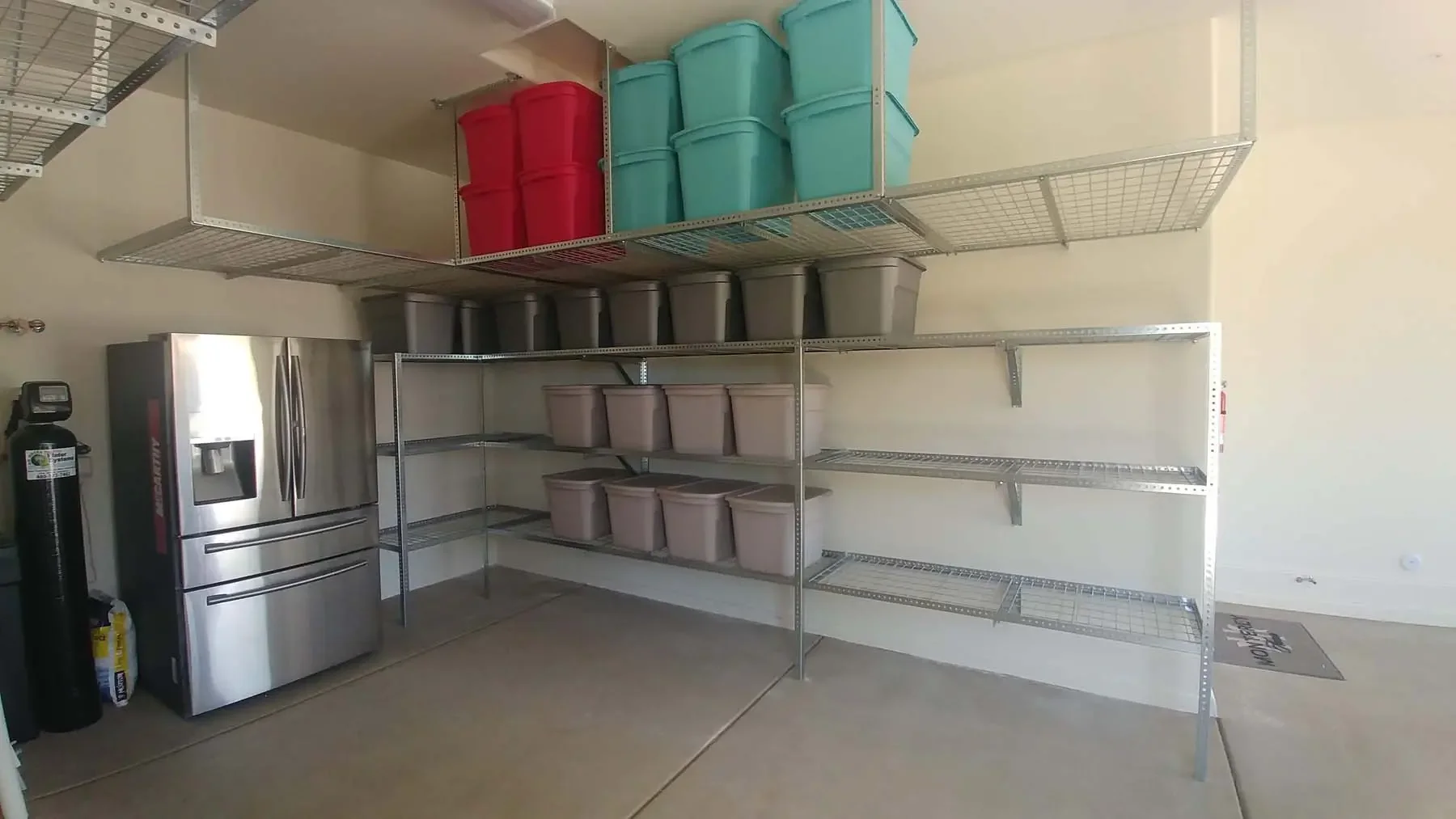
- Shelving along the walls keeps categories visible and frees the floor for cars.
- Clear or labeled bins by category, like camping, holiday and tools, so nothing gets buried.
- Heavy items low and seasonal items high.
- A drop zone near the door for things that need to go inside or out to the car.
A garage that works in Phoenix is one where anything heat-sensitive is already inside, and everything left has a place.
Common Questions About Organizing a Phoenix Garage
These are the questions Phoenix-area homeowners ask most when they take on the garage. Each answer ties back to the sources above.
What should you not store in a garage in Phoenix?
Anything with a heat limit a Phoenix summer can exceed. Aerosol labels warn against temperatures above about 122°F, some tool battery makers say not to store them where it reaches 105°F, and propane cylinders belong outside. Photos, papers and keepsakes also do better inside the cooled house.
When is the best time to organize a garage in Phoenix?
Early morning, and ideally outside the peak of summer. The National Weather Service says the coolest part of the day is usually between 4 and 7 a.m. Work in short sessions, drink water regularly, and have someone with you who can watch for signs of heat illness.
How do I get rid of old paint and chemicals in Phoenix?
Phoenix solid waste customers can schedule one free household hazardous waste home collection a year. Items must be in sealed, leakproof containers inside a box labeled HHW, and must never be left at the curb. Maricopa County also notes that dried paint can go in regular trash with the lid off.
How does bulk trash pickup work in Phoenix?
Phoenix collects bulk trash by appointment only. Each customer gets four collection opportunities a year, with a pile no larger than 10 cubic yards. Hazardous waste, tires and appliances with refrigerants are not accepted, so sort those out first. Other cities, including Scottsdale, set their own rules.
Can I store lithium batteries in my garage?
It is better not to in a Phoenix summer. DeWalt, for example, says not to store its tool batteries where the temperature can reach 105°F, and Phoenix’s normal July high already tops that outdoors. Keep batteries inside the house, and never put lithium batteries in household trash or recycling.
How long does it take to organize a garage?
It depends on how full it is and how many decisions need to be made. Sorting is usually the slowest part, especially with items to donate, sell or dispose of. In Phoenix, working in shorter early-morning sessions adds time but is safer. A free consultation can give you a realistic plan.
Learn more about our garage organization in Phoenix and garage organization services across the Valley.
Ready to take back your garage? Start with a free consultation.
Tell us what is in there. We will build a sorting plan around the heat, help you decide what stays, and give you a clear estimate before any work begins, so there are no surprises.